
Wild and captive budgies: understanding their needs
Same natural instincts, different lifestyles. A safe home and a full food bowl are the beginning of good care.
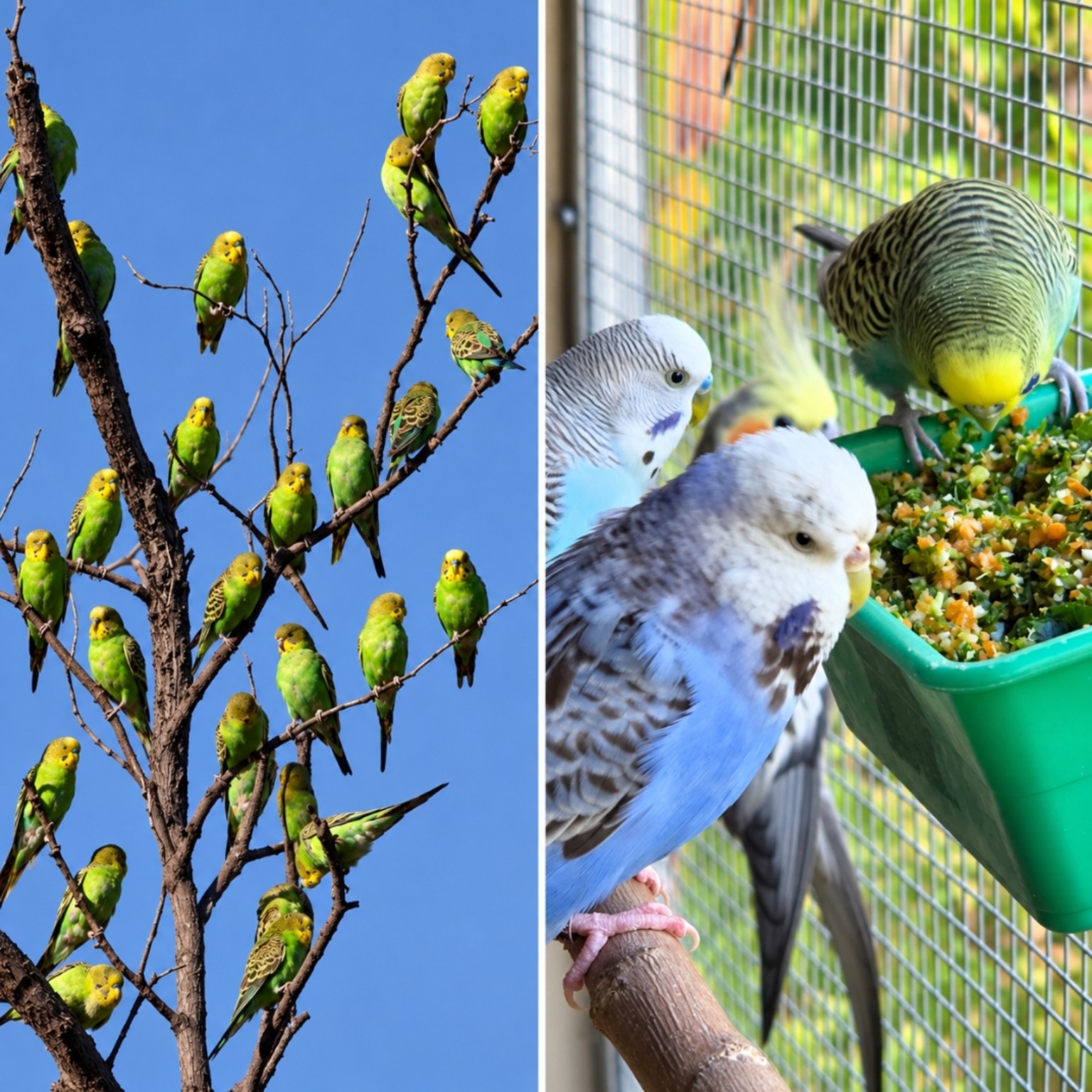
A busy life in the wild
A wild budgie does not wake up beside a freshly filled food bowl. Much of its daily activity revolves around finding food and water, moving with its flock and staying alert to predators. As prey animals, budgies must balance feeding and other activities with watching for danger.
Their day also includes communicating and socialising, preening, exploring, resting, finding shelter and bathing when conditions allow. When conditions are suitable, some birds also pair up and raise young. Wild life offers opportunities for natural behaviour, alongside shortages, illness and other hazards.
In captivity, we provide reliable food, fresh water, shelter and protection. Being born in our care does not remove a budgie’s natural instincts or its need for activity and companionship.
1. Enrichment is part of everyday care
With less time spent searching for necessities, captive budgies need other opportunities to explore, make choices and use their minds and bodies.
- Foraging activities that let them search and work for some of their food.
- Bird-safe toys and suitable natural branches to investigate and chew.
- Natural perches in varied diameters, with clear space between them for movement.
- Room and safe opportunities to fly, compatible budgie companionship and bathing by choice.
- A predictable routine and quiet, undisturbed rest.
Introduce unfamiliar items gradually, inspect toys regularly for damage and entanglement risks, and keep flight paths clear. Enrichment should suit each bird’s abilities and confidence.
2. Food: variety and balance
Wild budgies eat predominantly seeds from native grasses and herbaceous plants. They encounter different seed types and stages of ripeness, including developing green seeds and mature seeds, as conditions change. Fruit is not a major staple of their wild diet. This is different from the same limited dried seed mix every day.
For captive birds, offering seed, vegetables and leafy greens provides variety, but it does not automatically create a balanced diet. Birds may pick out favourites and leave other foods untouched. What they actually eat matters.
Why our view on pellets changed
“I wasn’t always a pellet fan—people who know me would agree! My view changed after researching different brands, ingredients, how the foods are made and the benefits of species-appropriate formulations.” — Tony Williams
We chose Finch & Budgie Crumbles because they are formulated by avian veterinarians for these birds, with grains, amino acids, vitamins and minerals in a small crumble. Nutrients are incorporated into the food, helping reduce selective feeding within that food. This product contains no artificial colours. Vetafarm describes its extrusion process as supporting digestibility and food safety.
Manufactured foods should be assessed by their ingredients, nutritional balance and suitability for the bird. “Natural” alone does not establish nutritional completeness.
Make diet changes gradually. Monitor actual intake and weight, and seek avian-veterinary advice about the balance appropriate for your bird. Never suddenly withdraw familiar food or assume a bird recognises a new food.
3. Veterinary care makes a difference
A sick wild budgie cannot visit an avian veterinarian or receive the treatments available to birds in our care. Captive birds can benefit from examinations, diagnostic tests and treatment for injuries, infections and parasites such as scaly-face mites or worms when needed.
Supplements and parasite treatments should be chosen for the individual bird, its circumstances and veterinary advice. Extra vitamins are not automatically needed when a bird eats an appropriately balanced formulated diet.
Keep track of appetite, activity, weight and droppings. Birds can hide illness, so changes deserve prompt attention. Our bird health tips explain warning signs, and Rescue Vet Finder can help you locate veterinary services.
Sharing what we learn
We respect that people make different feeding choices. We share what we feed, why we feed it and what we have learned to help others make informed decisions. Our approach has changed as we have researched and learned more, and we are happy to acknowledge that.
Our birds depend on us for balanced nutrition, enrichment, companionship, exercise, health care and a safe home where they can enjoy being birds.
Supporter acknowledgement: Vetafarm supports Budgie Sanctuary Rescue with supplies. We appreciate that support and disclose it when discussing their products. Other suitable diets are available; individual feeding plans should be discussed with an avian veterinarian.
Sources and further reading
- Australian Museum: Budgerigar — natural history and wild diet
- RSPCA Australia: Helping your pet bird have a good life
- VCA Animal Hospitals: Feeding budgies
- Vetafarm: Finch & Budgie Crumbles — manufacturer’s product information
Reviewed 30 October 2026. General education and our sanctuary experience; seek individual veterinary advice for your bird.